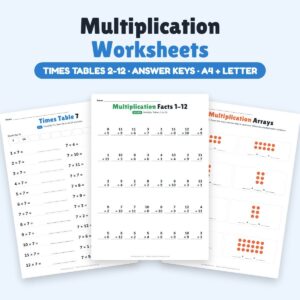

Once kids understand that multiplication means equal groups, they need lots of practice to remember the facts. These free multiplication worksheets give them exactly that, from the 2 times table to mixed facts up to 12 × 12.
Every PDF has the worksheet on page 1 and the answer key on page 2, in A4 and US Letter.
Related: Multiplication Chart
Times Tables Worksheets 2 to 12
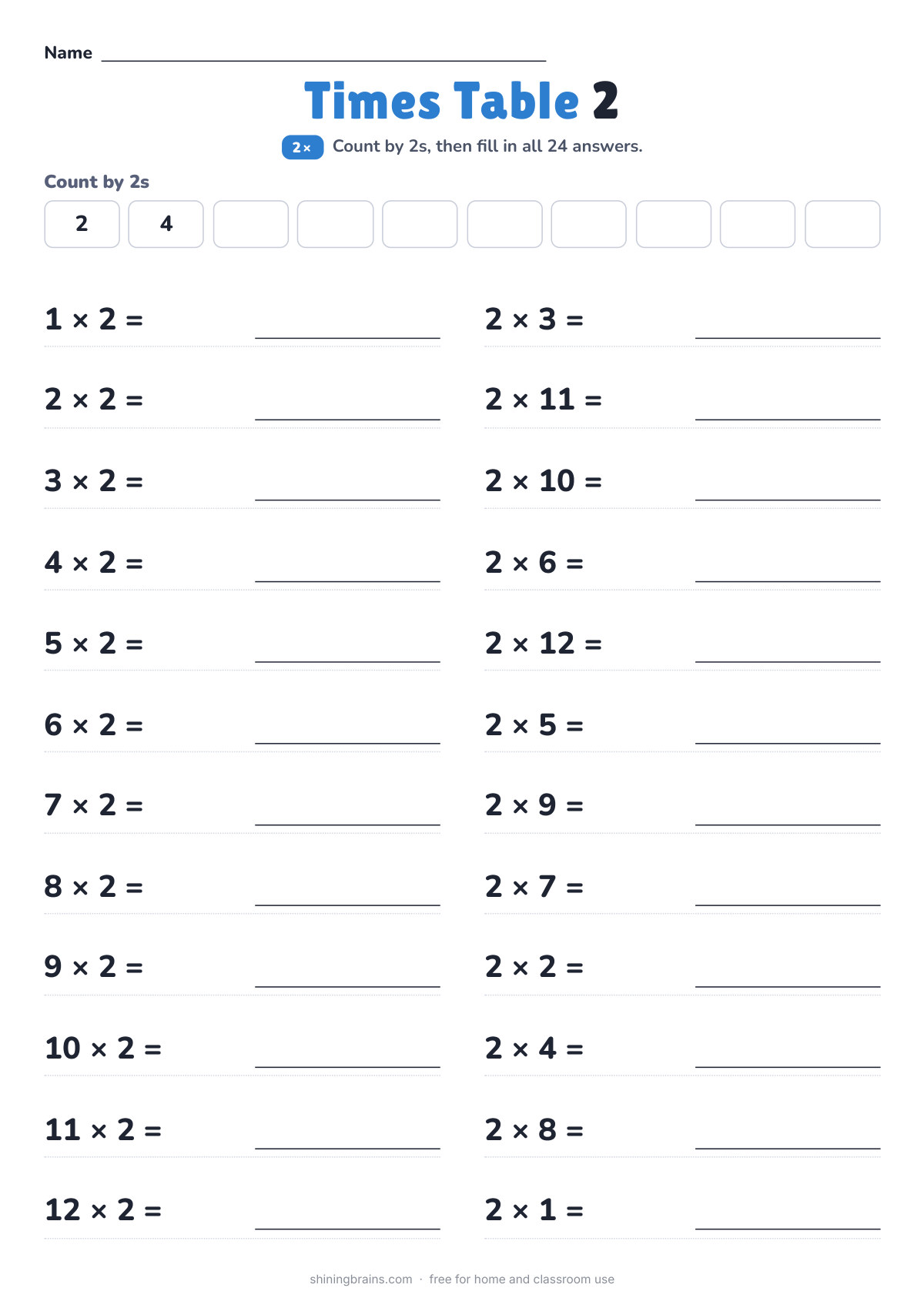
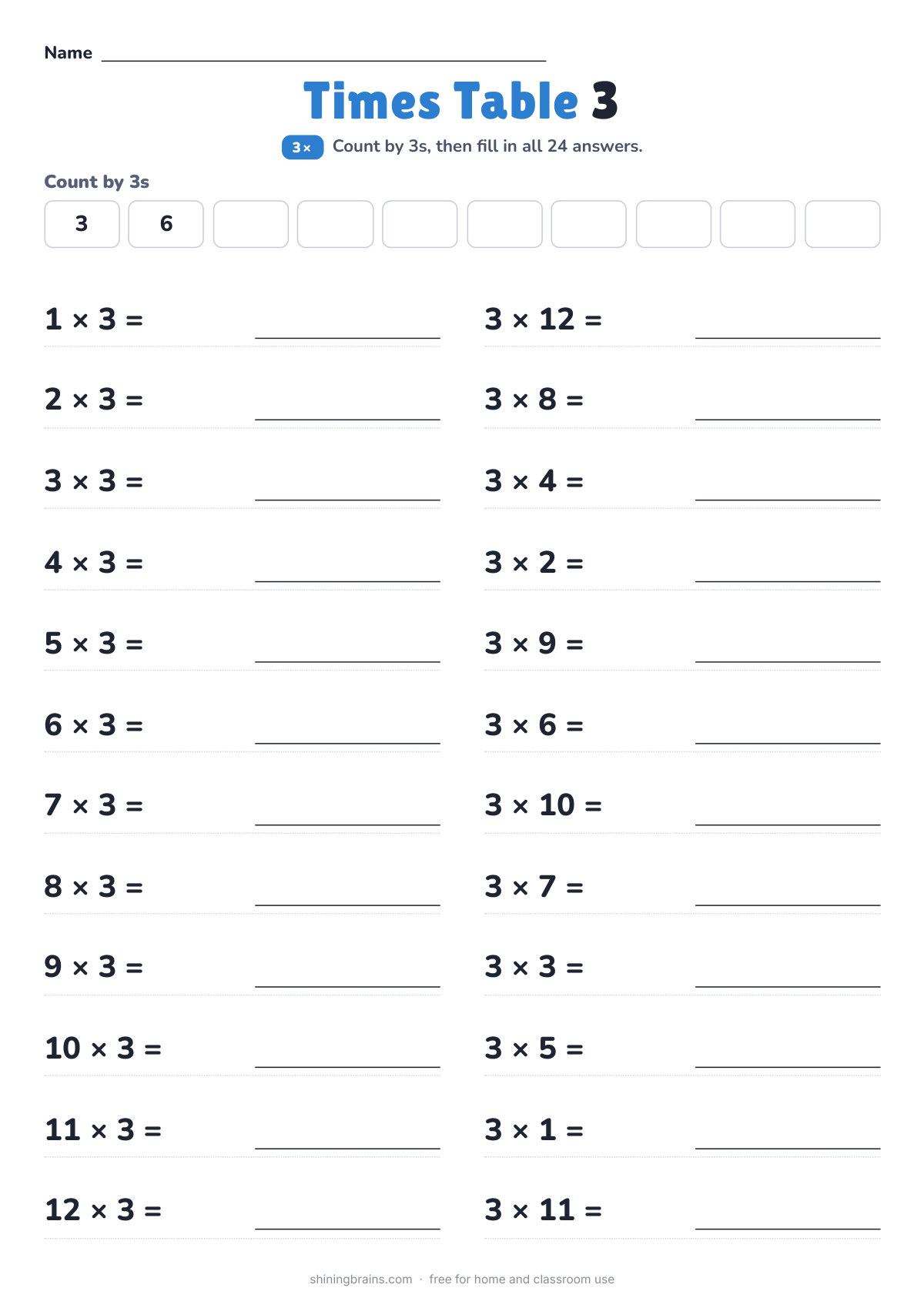
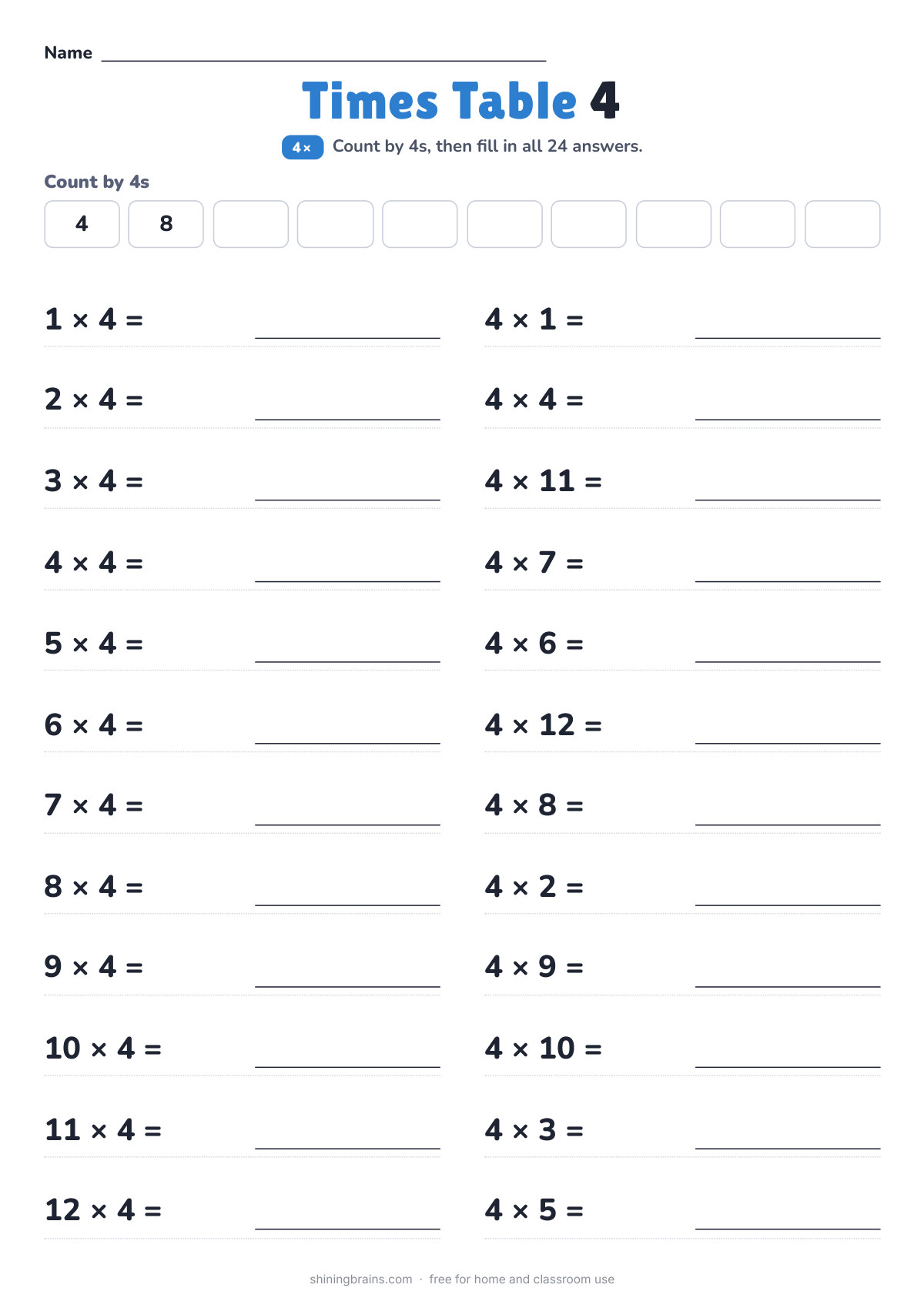
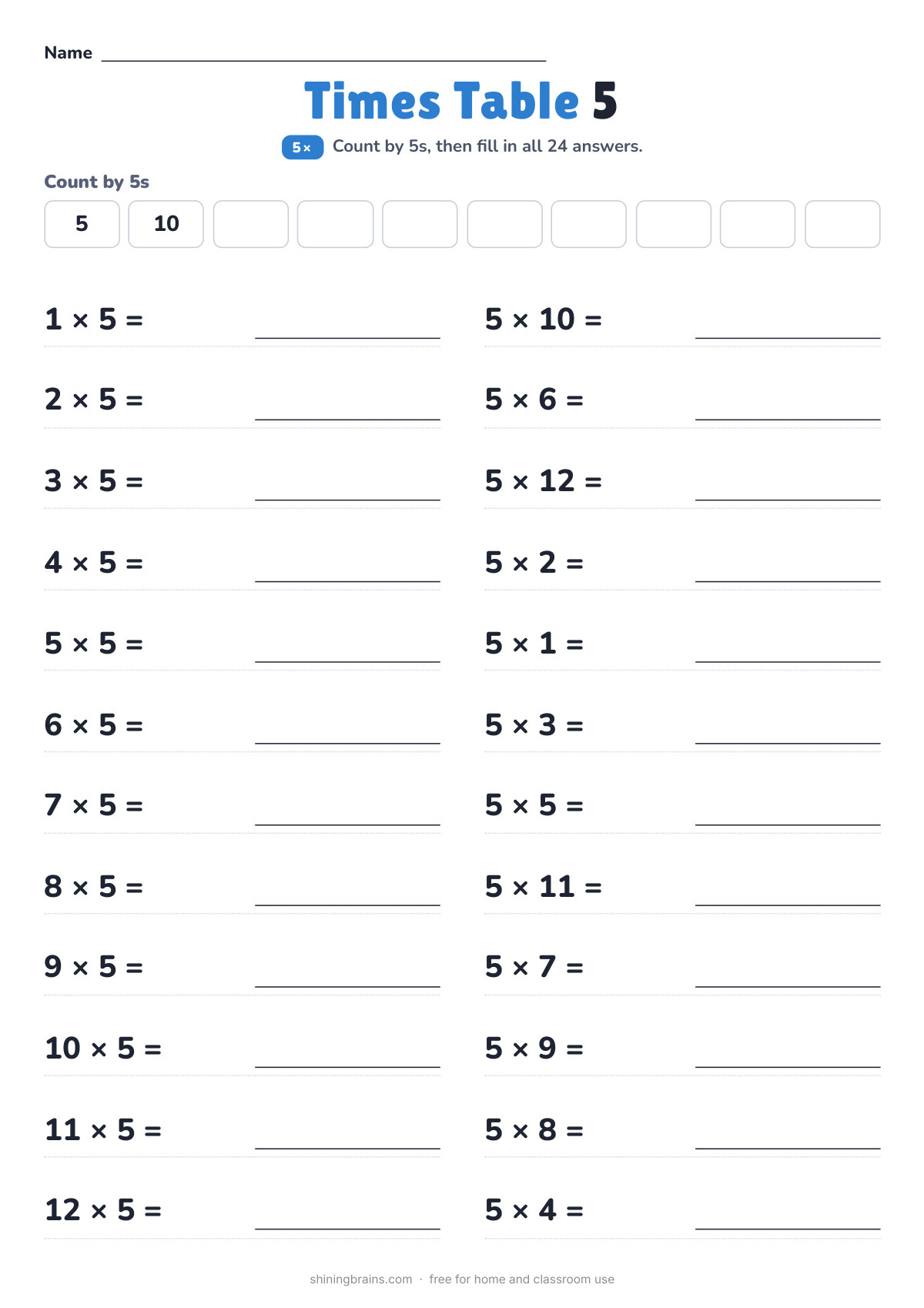
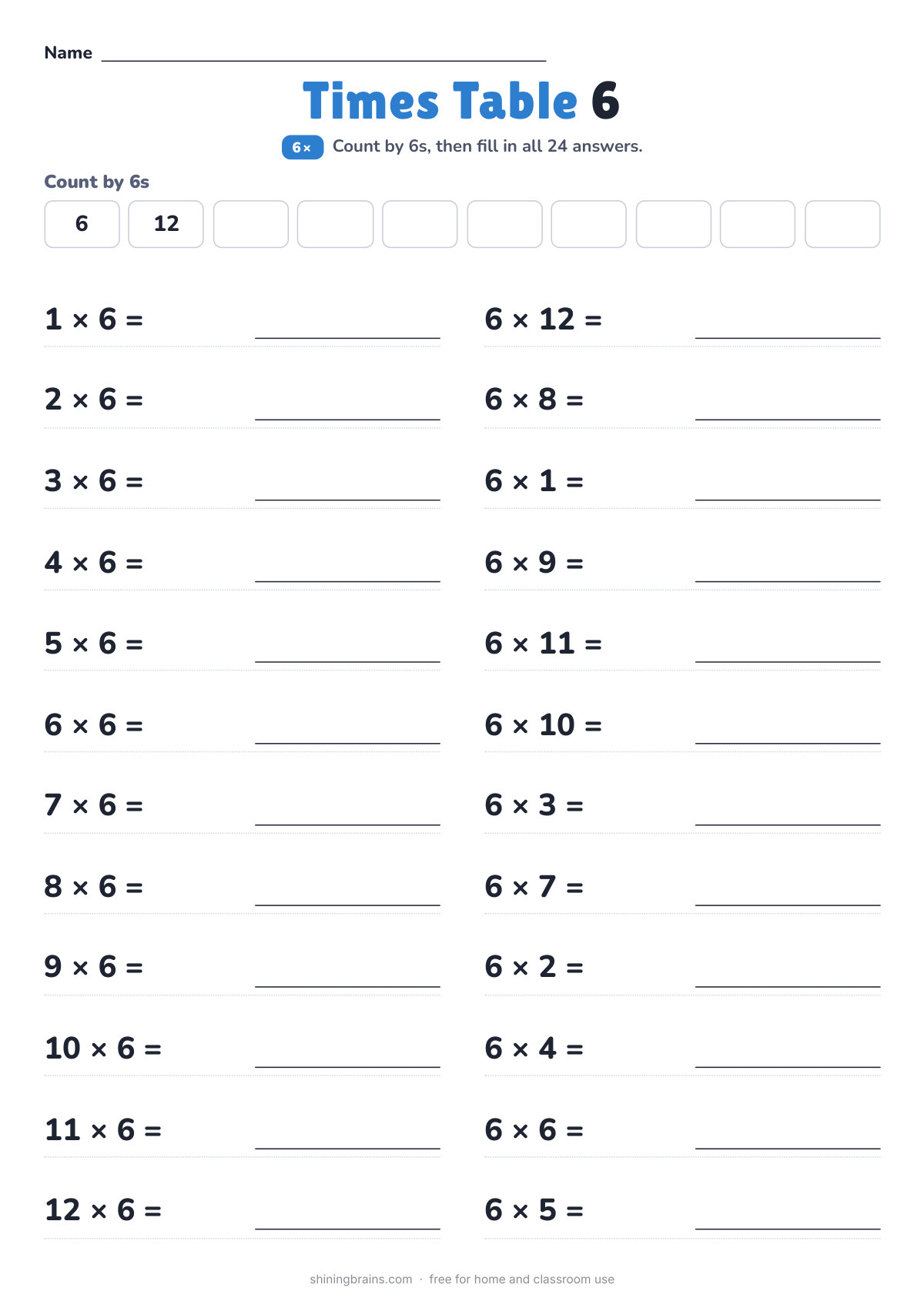
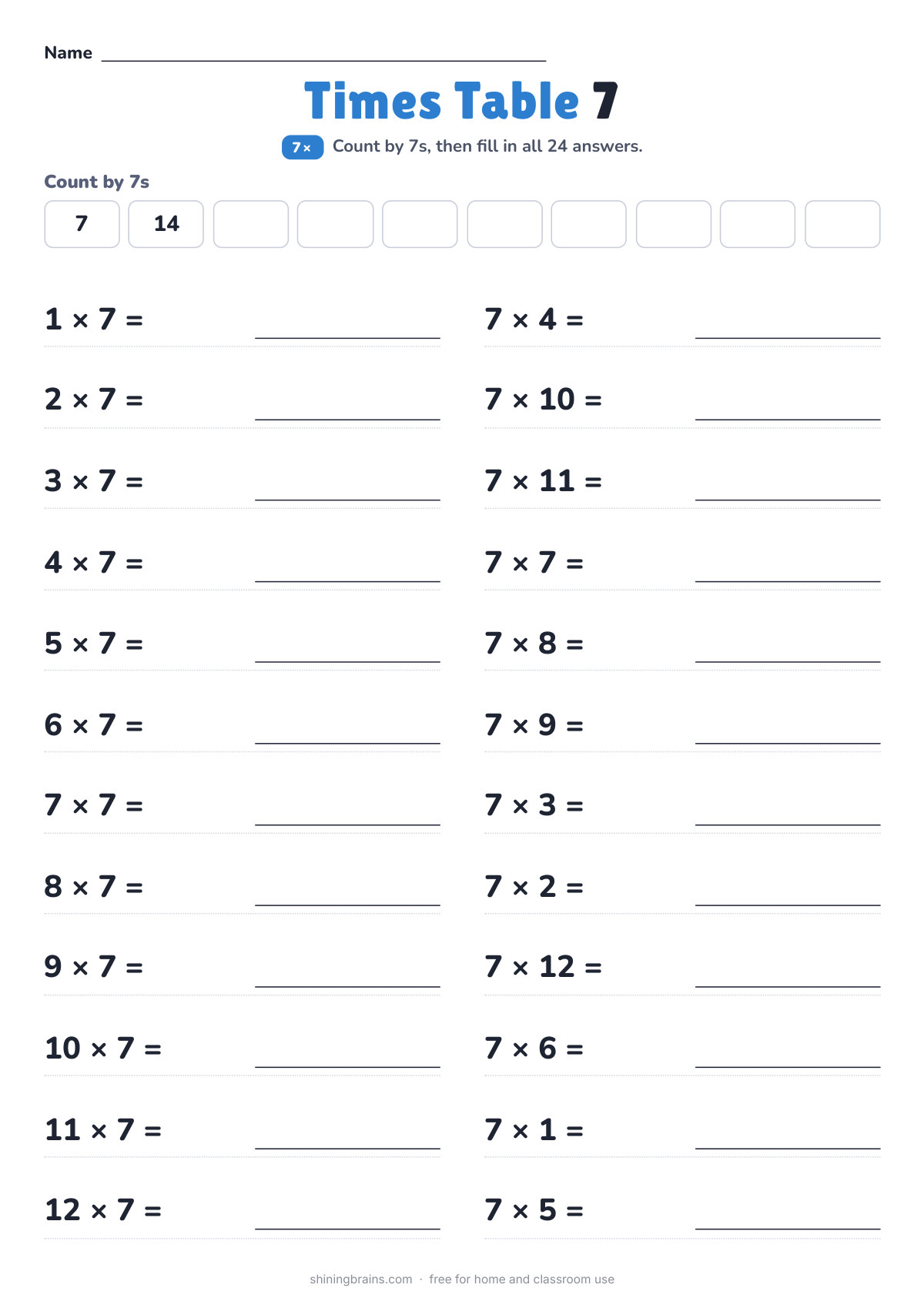
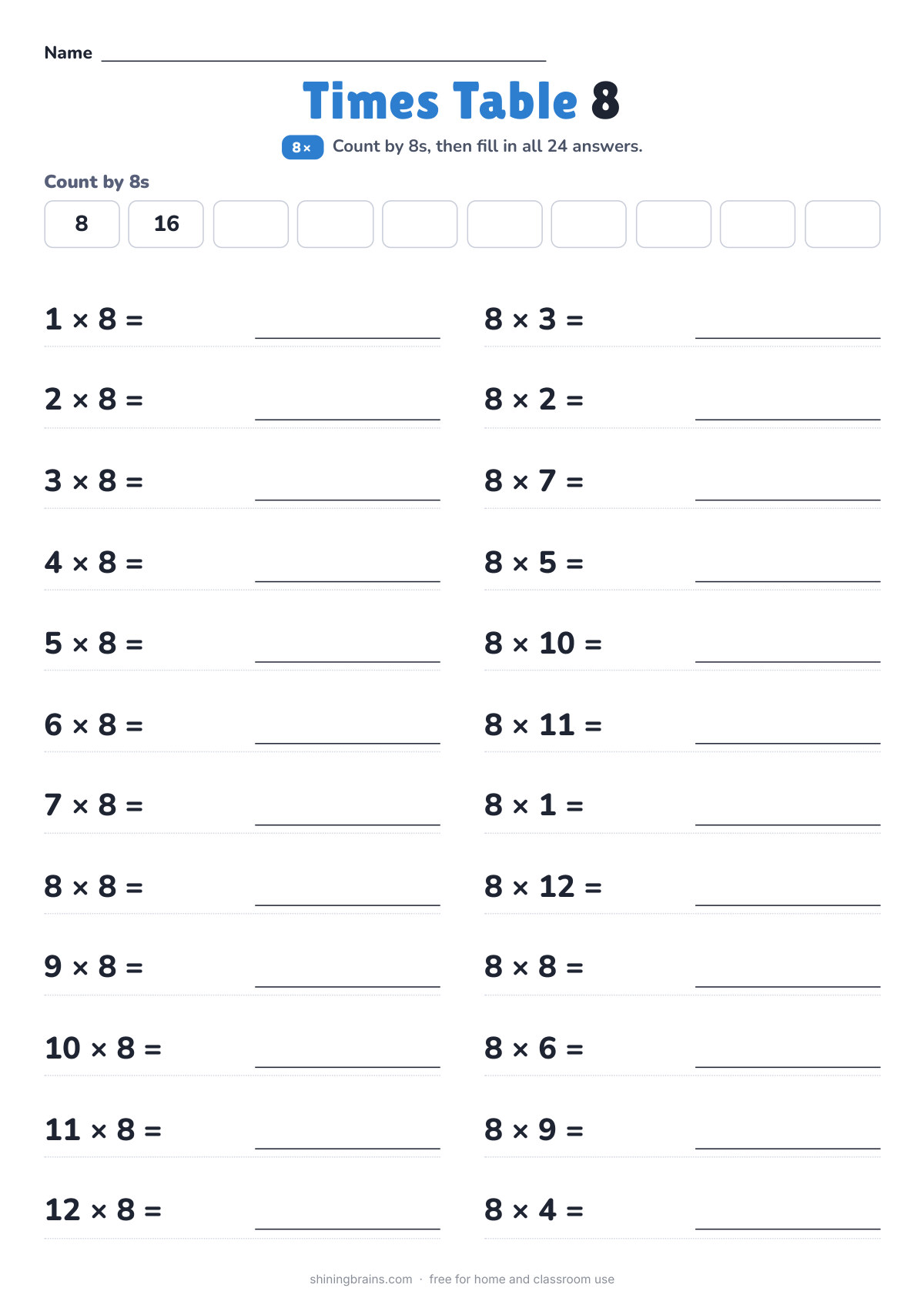
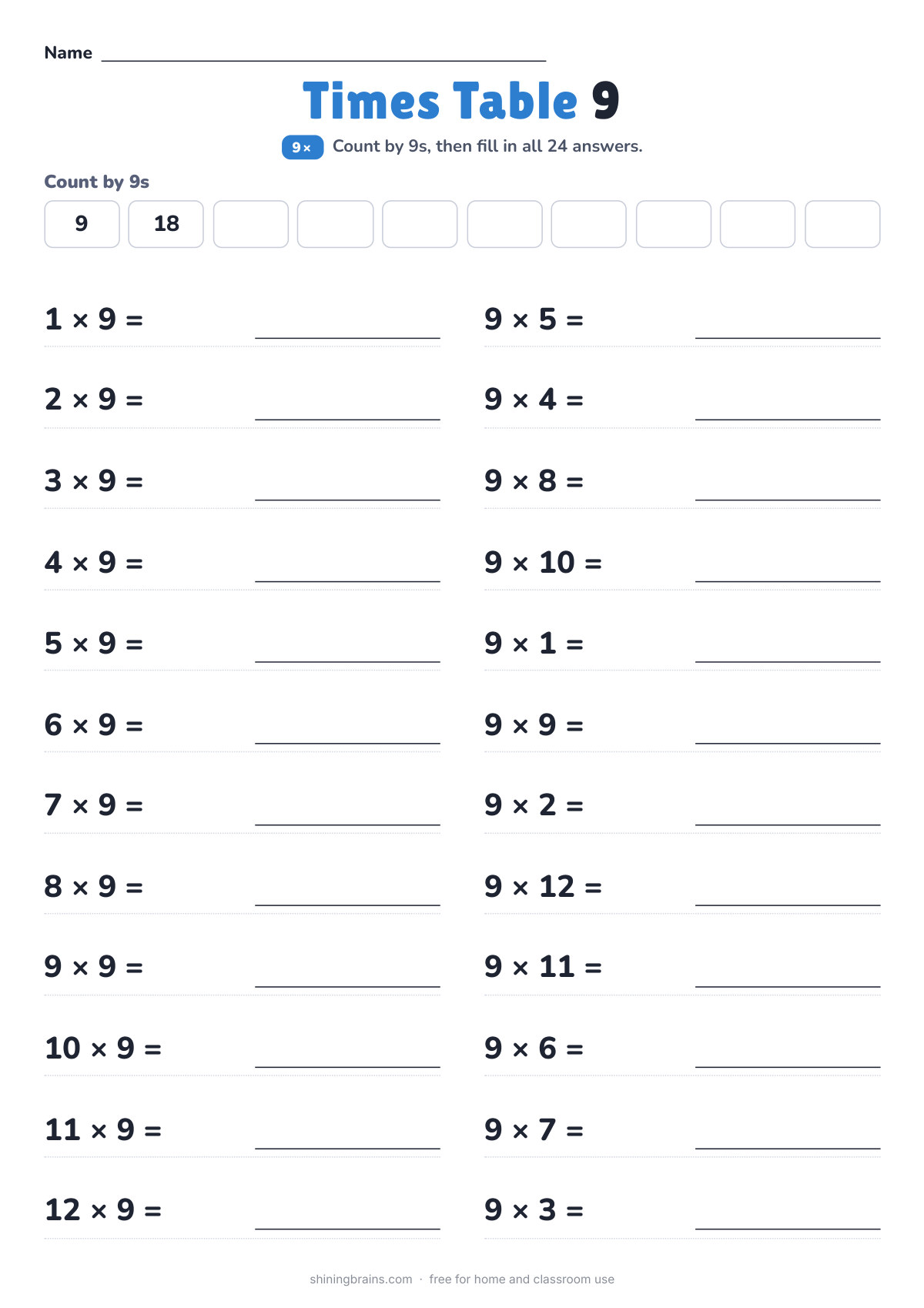
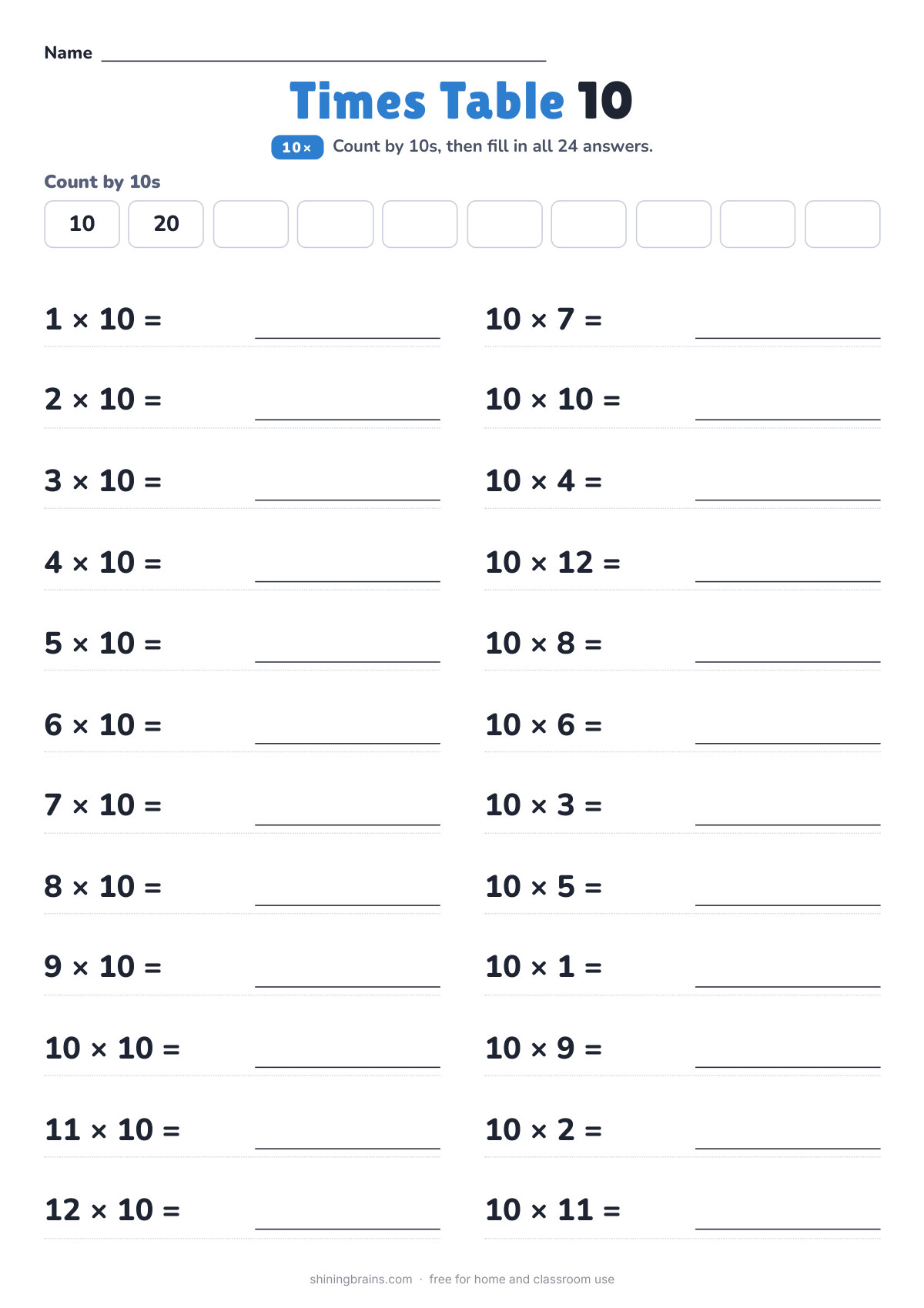
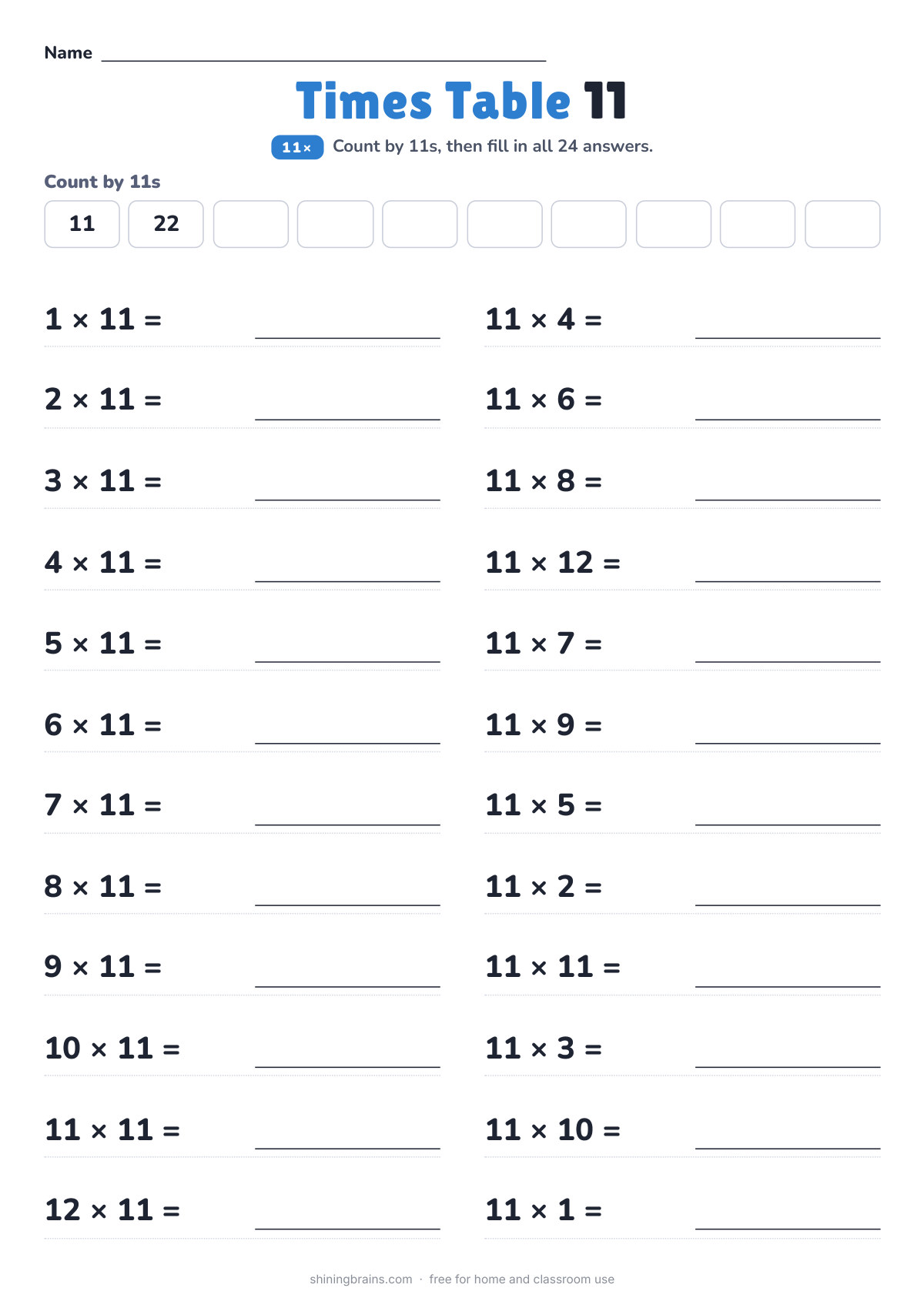
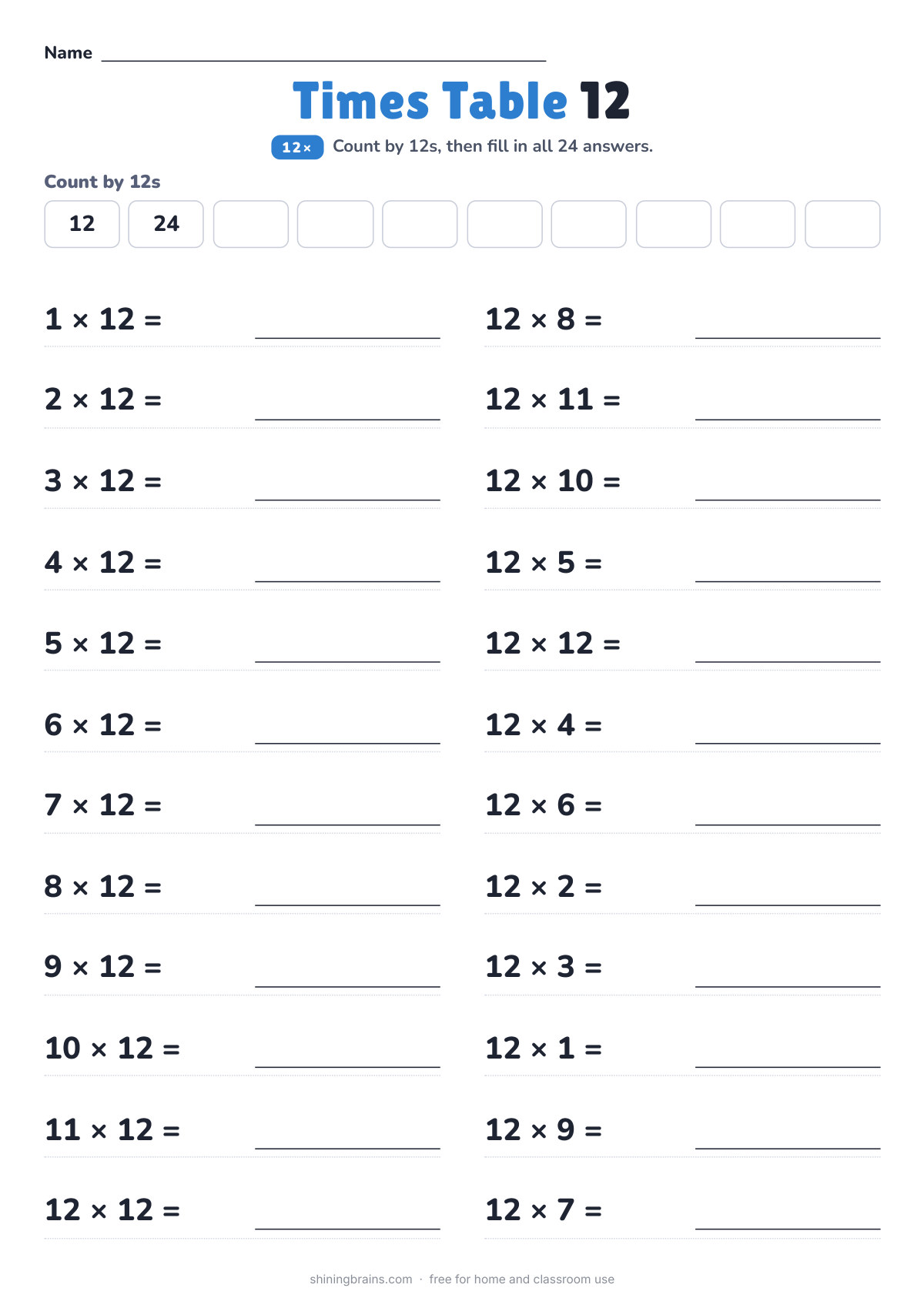
Each of these times tables multiplication worksheets practises one table. First, kids count by that number. Then they answer 12 facts in order and 12 mixed facts, so they cannot just copy the pattern.
Mixed Multiplication Worksheets
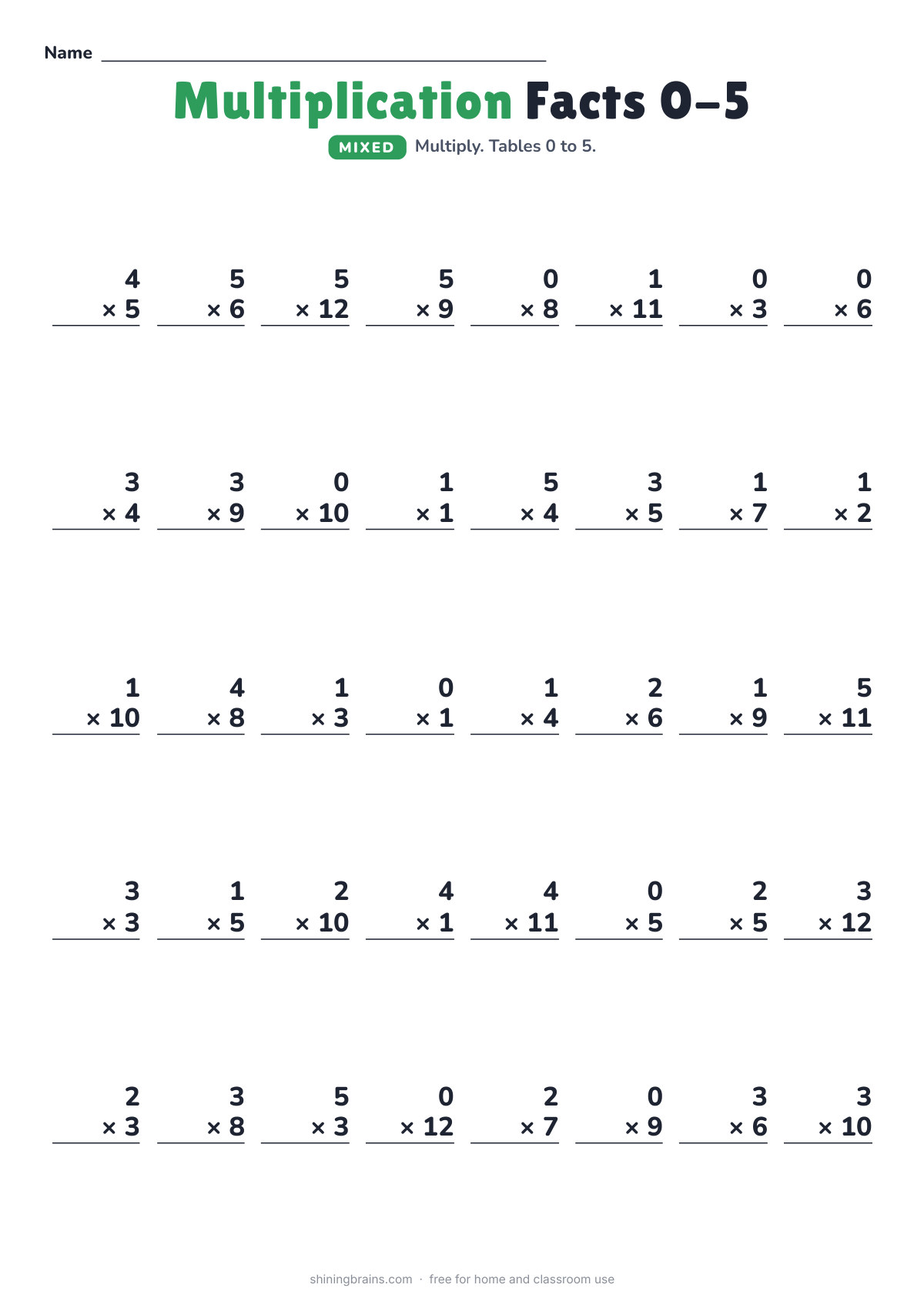
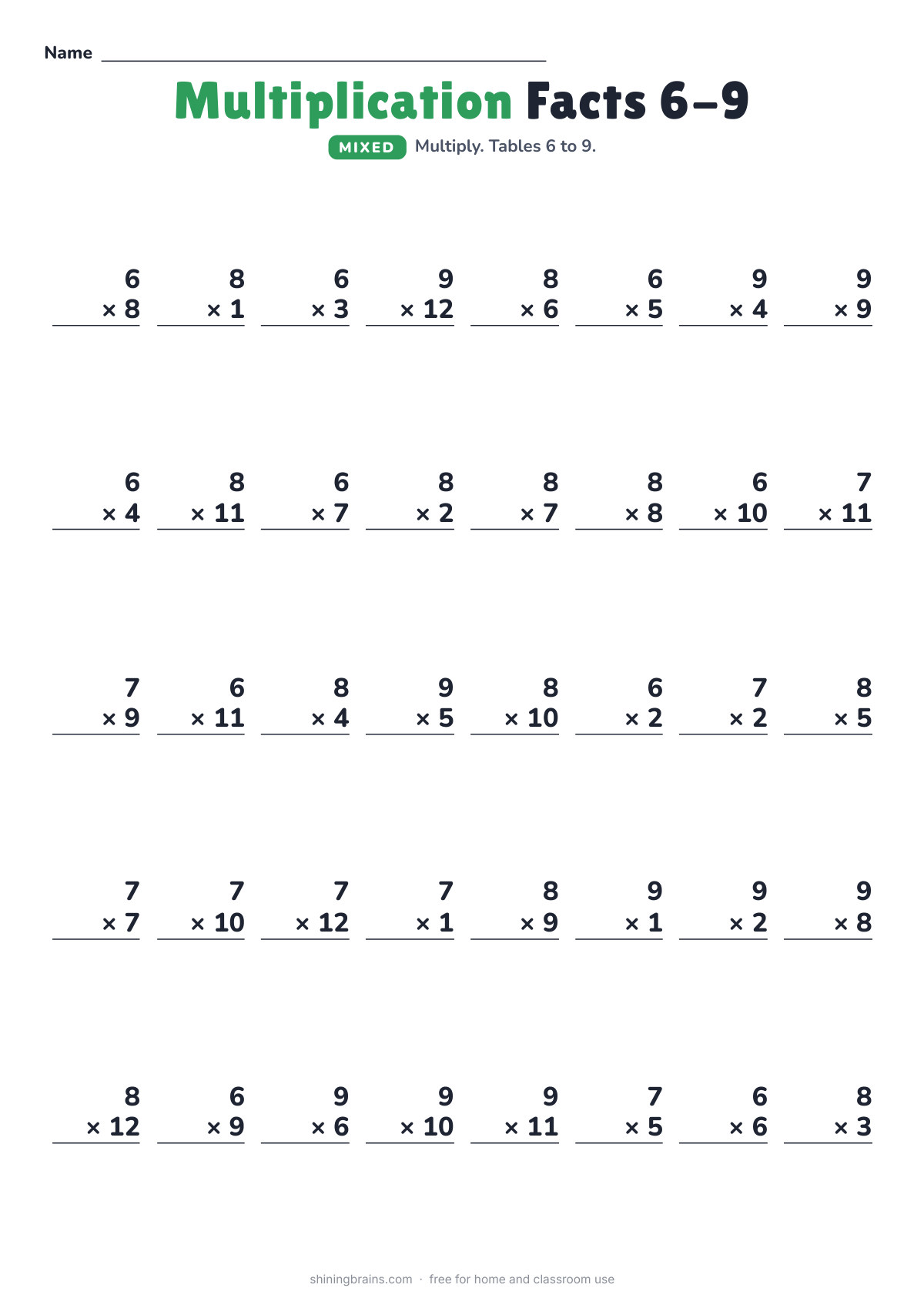
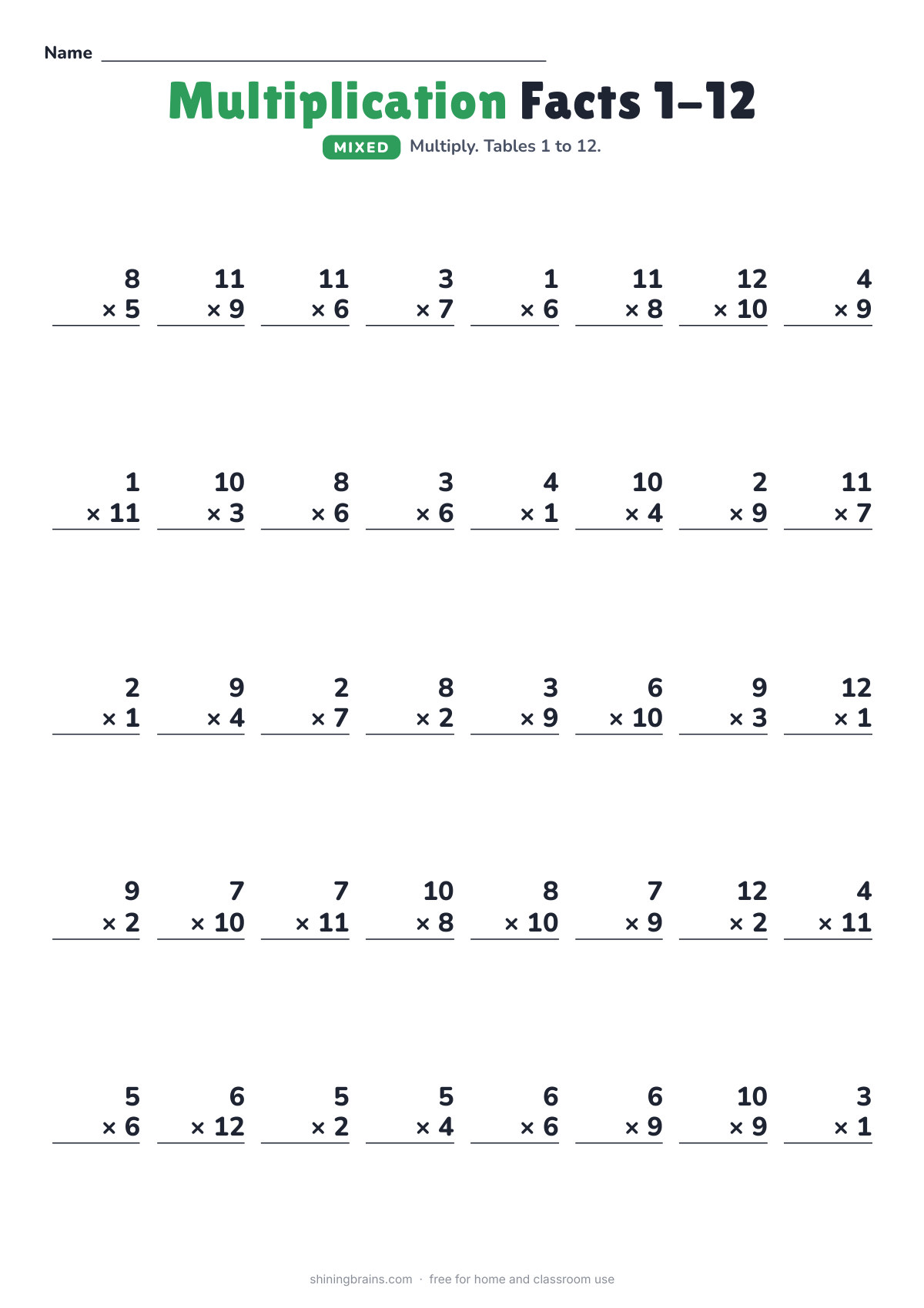
When kids know a few tables, mix them up. These mixed multiplication worksheets have 40 facts each in the column layout used at school: facts 0 to 5, facts 6 to 9 and a mixed sheet with every table from 1 to 12.
Also Check: Hundreds Chart Printable
Arrays, Missing Factors and Word Problems
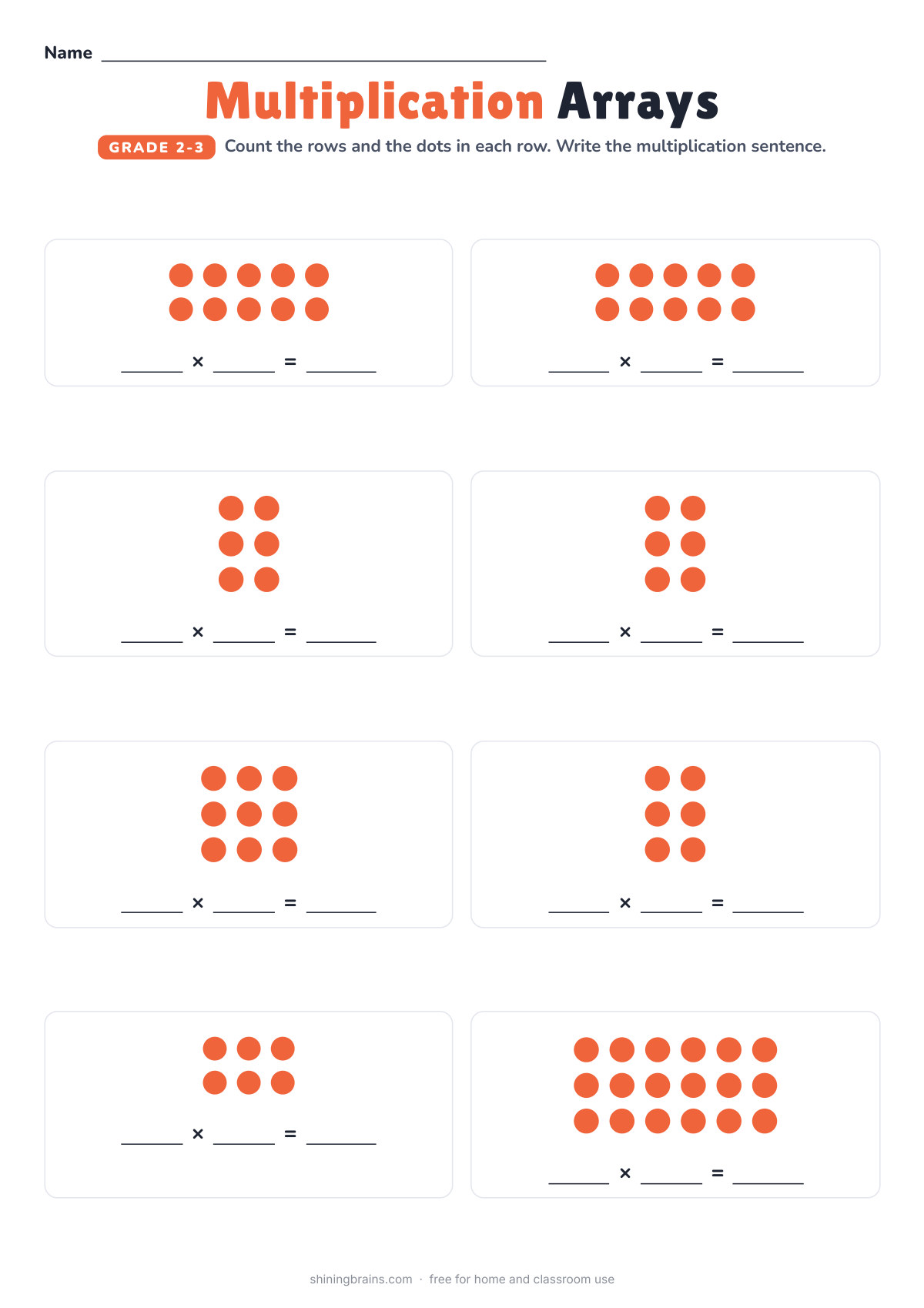
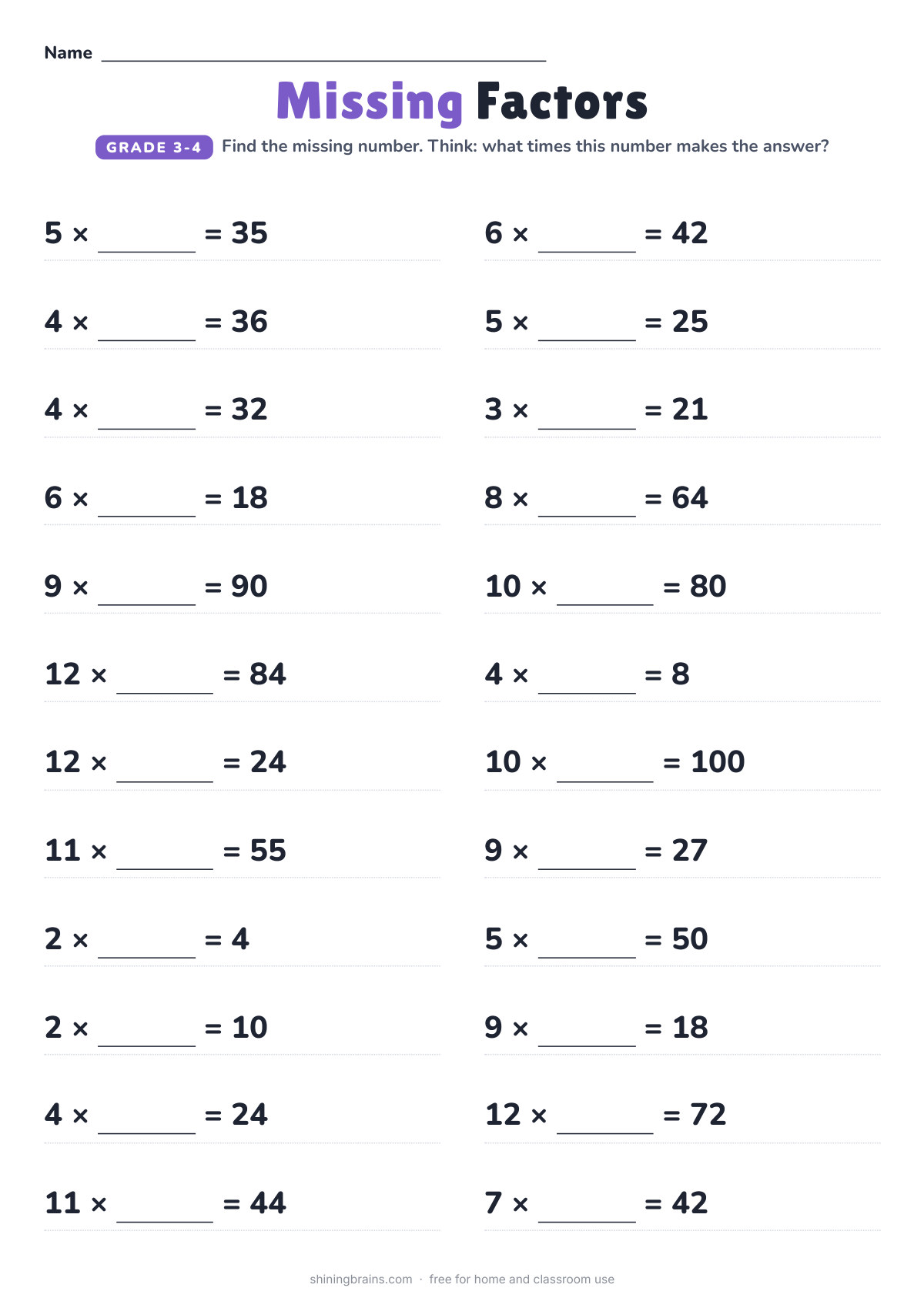
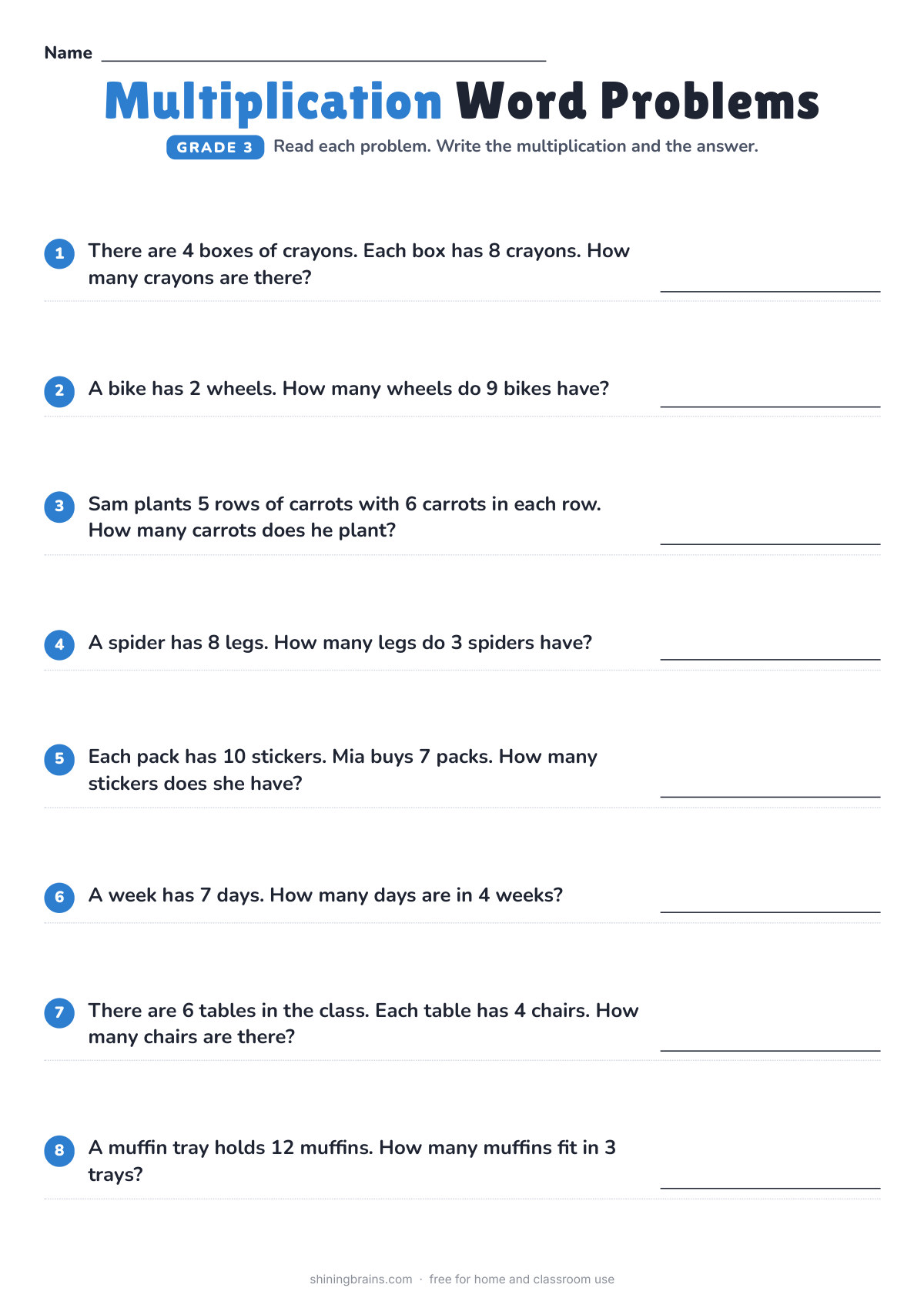
These three sheets build understanding, not just memory. With the arrays, kids count rows and columns of dots and write the matching sentence. On the missing factor sheet, they work backwards, which also prepares them for division. Finally, the word problems turn facts into everyday stories, such as boxes of crayons and spider legs.
Multiplication Speed Drill
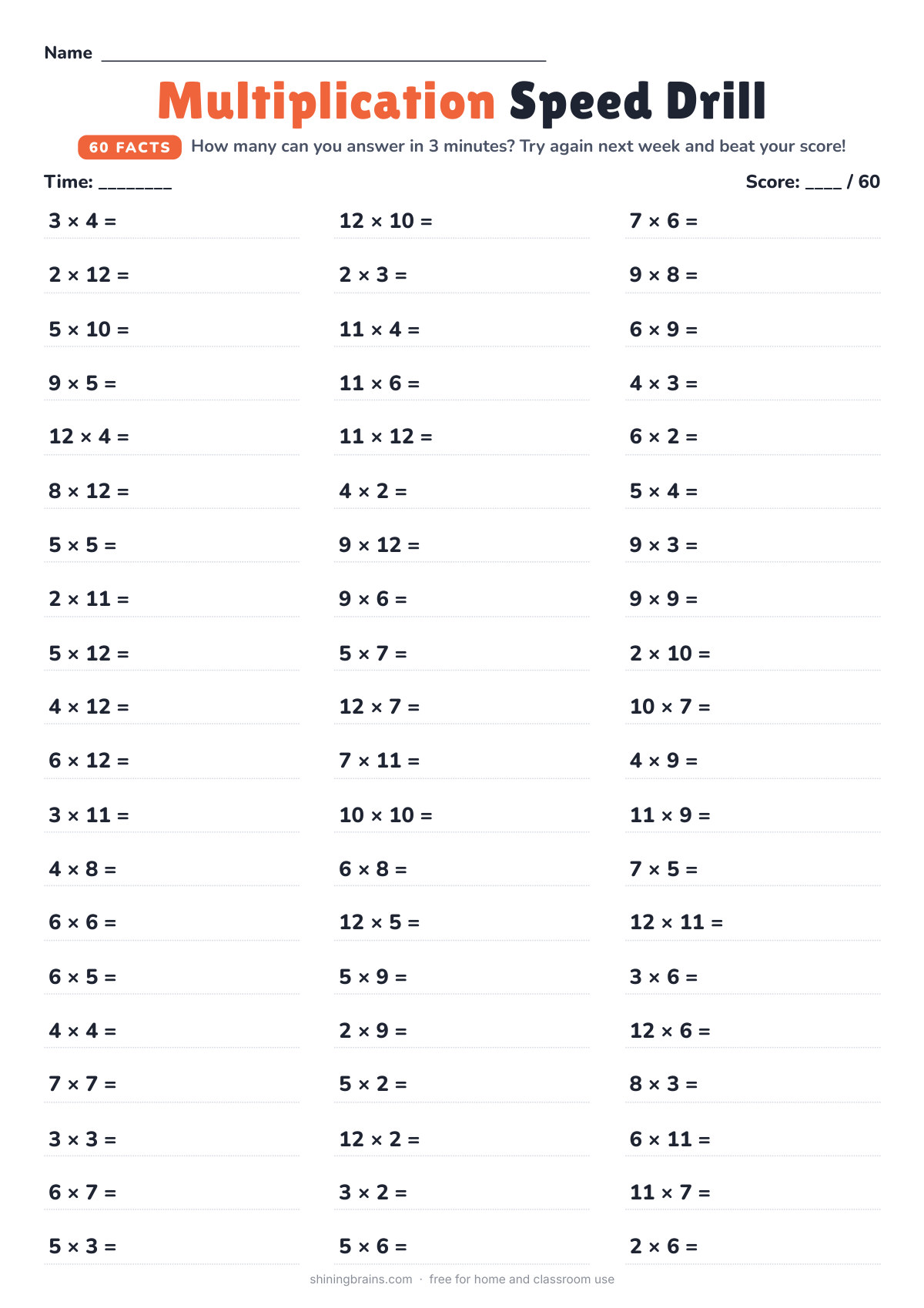
For older kids who know their tables, the speed drill has 60 mixed facts. Set a timer for 3 minutes, mark the score and try again a week later. Beating their own score keeps practice fun.
Which Multiplication Worksheets Should My Child Use?
- Start at ages 6 to 7: arrays, then the 2, 5 and 10 times tables.
- Move on at ages 7 to 8: the 3, 4 and 8 times tables, facts 0 to 5 and the word problems.
- Finish at ages 8 to 9: every table up to 12, mixed facts, missing factors and the speed drill.
Many schools teach the times tables in about this order, so start wherever your child feels confident. Meanwhile, a multiplication table chart on the wall makes a handy reference while they practise.
Tips for Learning Times Tables
- Little and often: one sheet a day works better than five on a Sunday.
- Use the chart first: a multiplication chart helps kids spot patterns.
- Say it out loud: reading the fact, like “seven times eight is fifty-six”, helps it stick.
- Turn it around: 3 × 8 and 8 × 3 have the same answer, so kids only need to learn half the facts.
Print one or two multiplication worksheets a week, and the facts will soon feel easy.
Follow us for more worksheets, videos and fun.