
A hundreds chart printable shows the numbers 1 to 100 in ten rows of ten, so kids can spot the patterns in our numbers. This free set has a colourful hundreds chart 1 to 100, a black and white 100 chart and a 120 chart. It also has a blank hundreds chart, a missing numbers chart and a skip counting chart, for kids aged about 5 to 8.
Quick pick: jump straight to the sheet you need.
- Ages 5 to 8: rainbow rows of ten
- Save ink: plain chart to colour your own patterns
- 1st grade: count all the way to 120
- Practice: 45 numbers to fill in
- Times tables: count by 2s up to 12s
Hundreds Chart 1 to 100
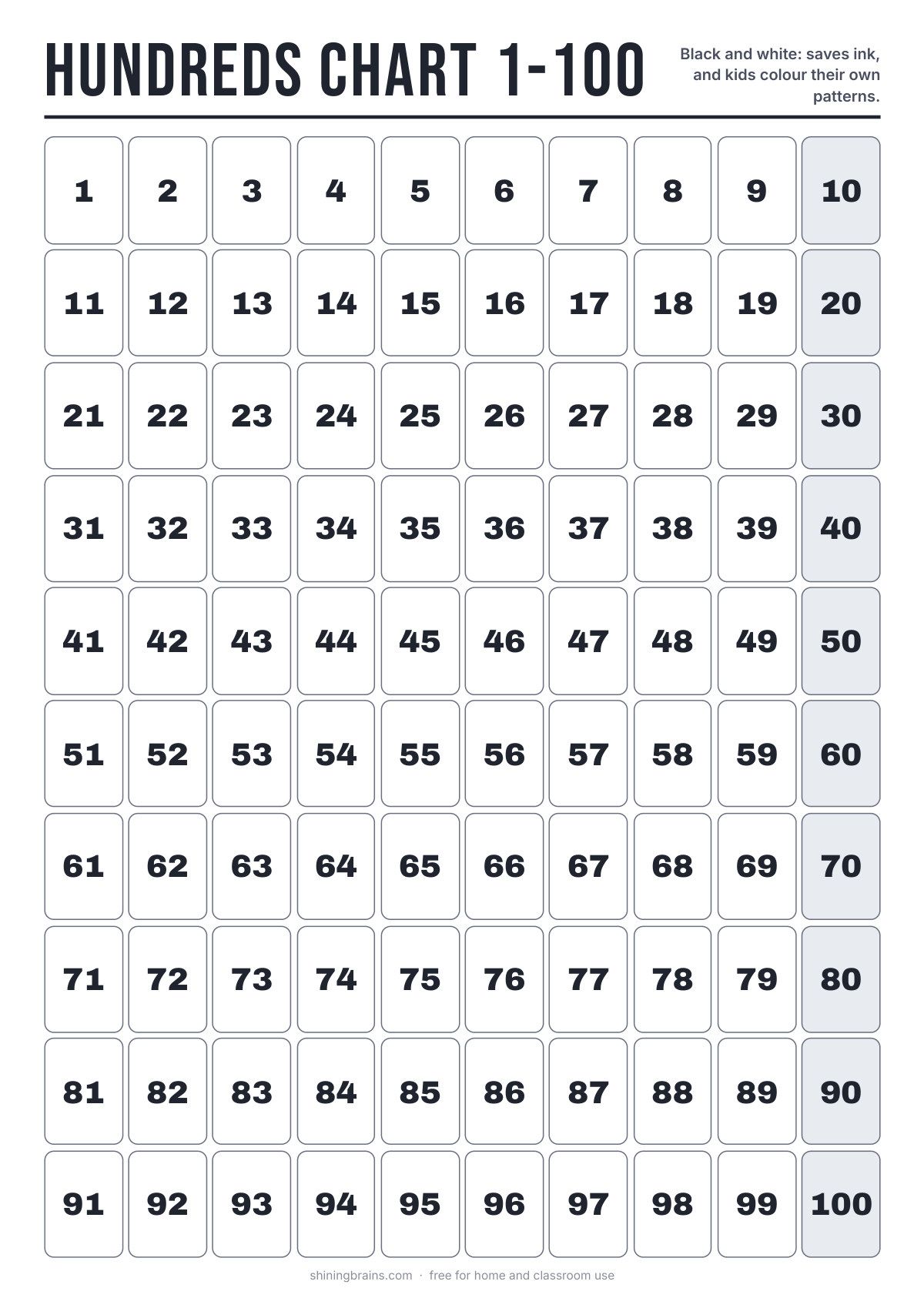
On this hundreds chart printable, each row of ten has its own crayon colour, and the tens column is a little darker. So kids can see at a glance that 34 sits in the 30s row. Going down one row always adds 10, and going right adds 1.
Black and White Hundreds Chart
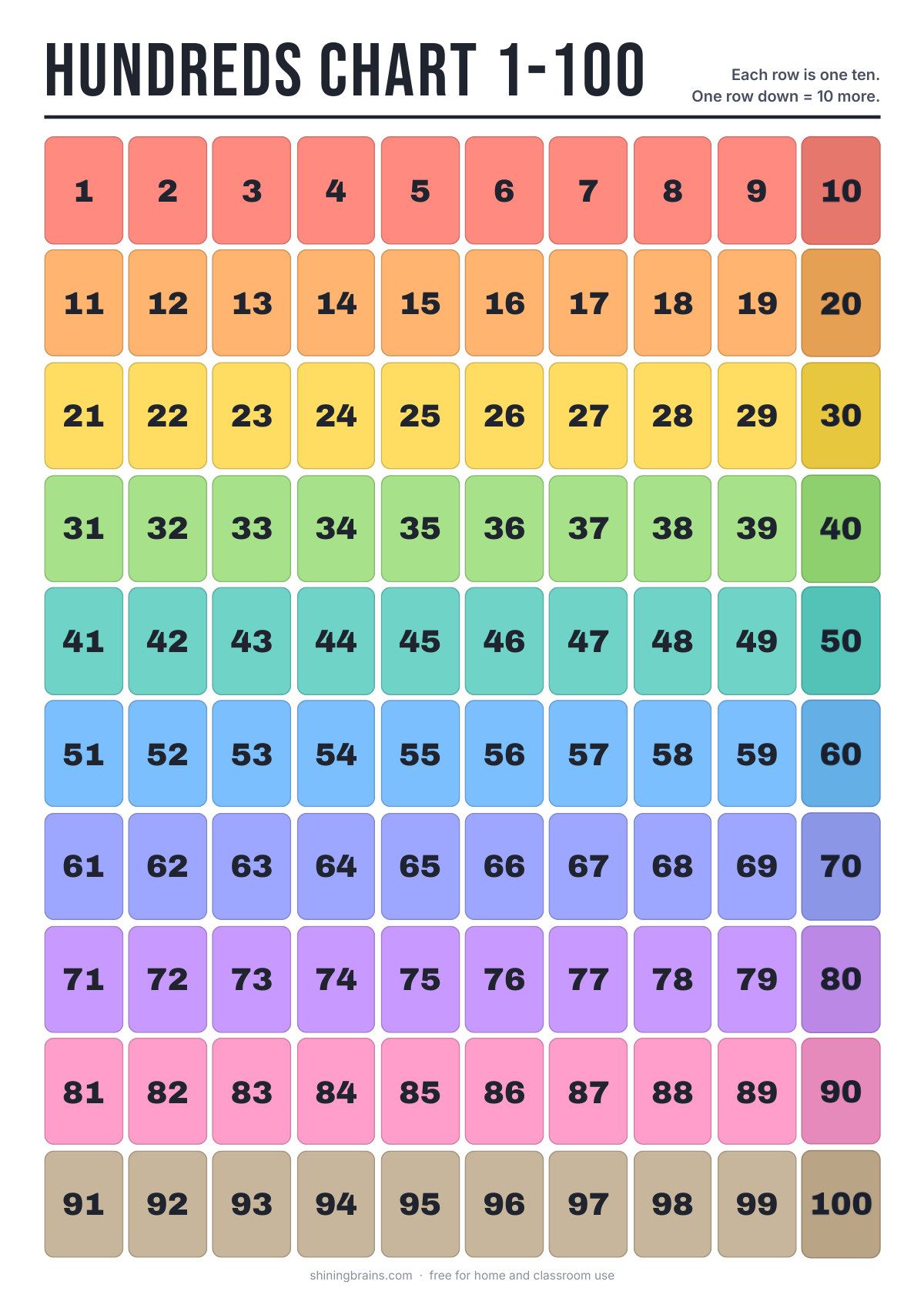
This version saves colour ink. It also gives kids a clean chart to colour their own patterns, such as every number that ends in 5. The tens column is lightly shaded to help them find their place.
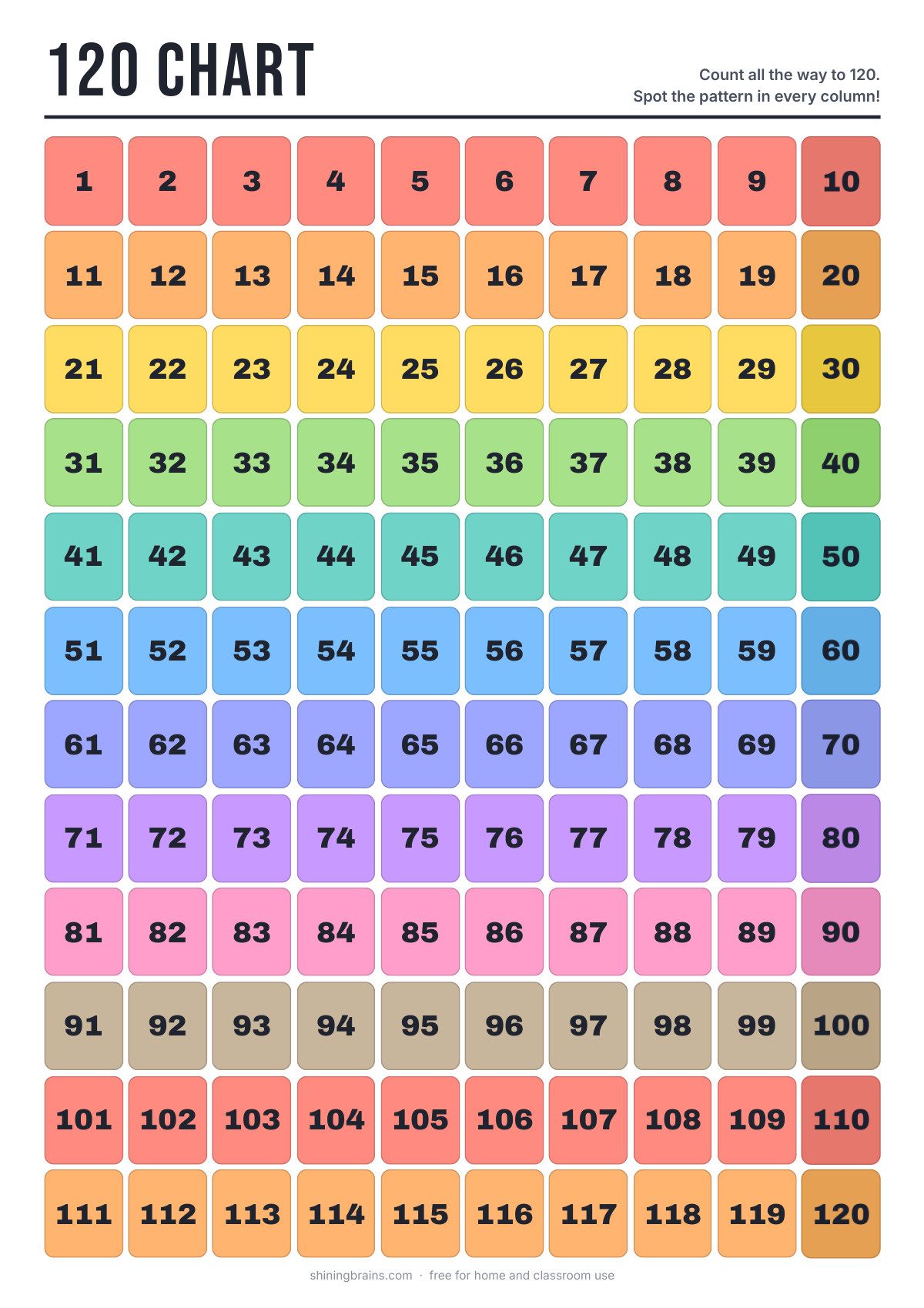
120 Chart
The 120 chart adds two more rows. In the US, the Common Core math standards ask 1st graders to count to 120, starting at any number. As a result, many first grade classrooms use a 120 chart instead of a 100 chart.
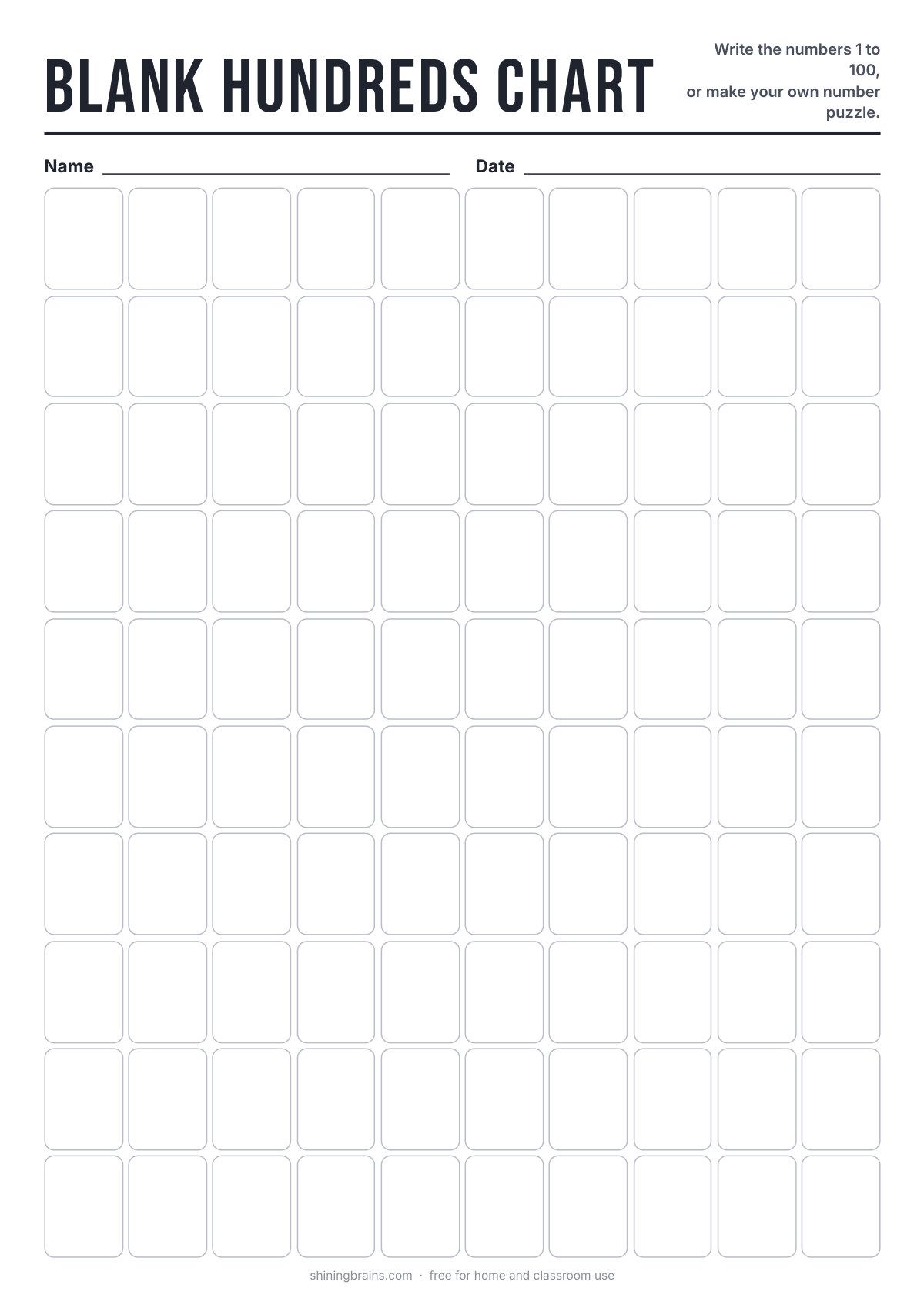
Blank Hundreds Chart
The blank hundreds chart printable has 100 empty boxes. Kids can write the numbers 1 to 100 themselves, which is great writing practice too. You can also use it for your own puzzles, such as filling in only the even numbers.
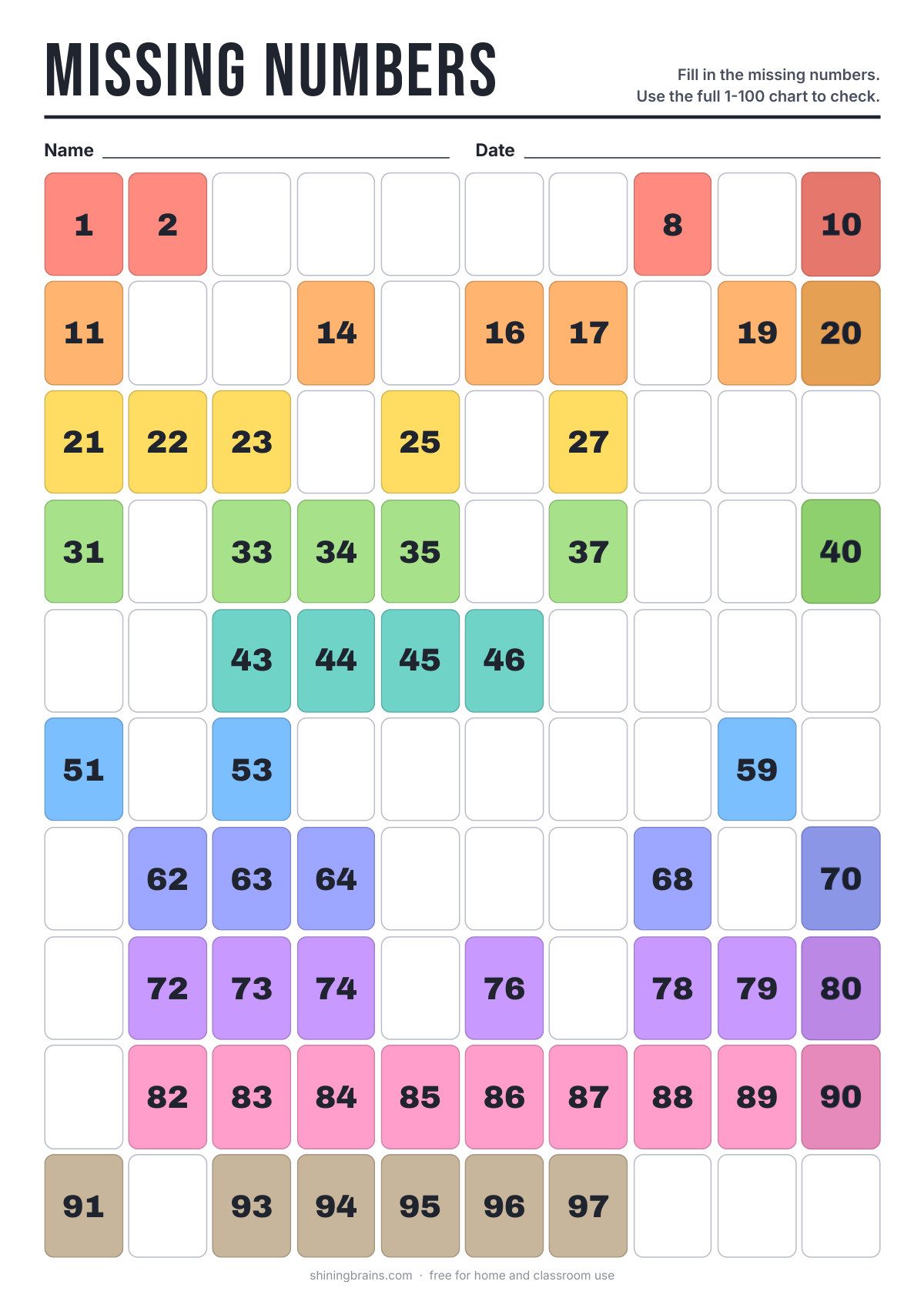
Hundreds Chart with Missing Numbers
In this hundreds chart printable, 45 numbers are missing. Kids look at the numbers around each gap to work it out. For instance, the box under 23 must be 33. When they finish, they check their answers with the full colour chart.
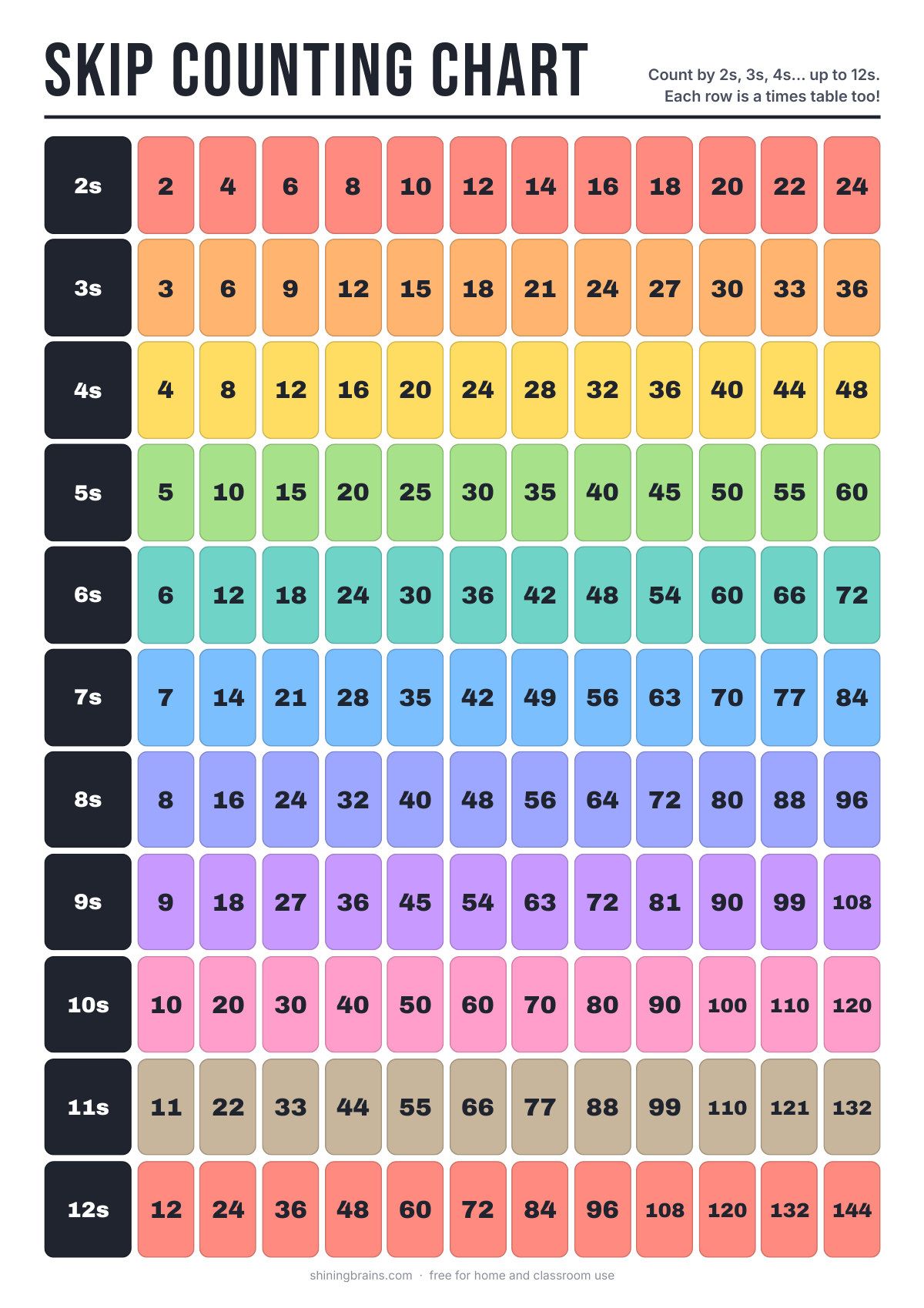
Skip Counting Chart
The skip counting chart has a row for counting by 2s, 3s, 4s and so on, up to 12s. Each row goes up to 12 steps. In other words, every row is also a times table, so it helps with multiplication later on.
Hundreds Chart Games
- Mystery number: “I am 10 more than 46. Who am I?” Kids find 56.
- Colour the pattern: on the blank chart, kids colour every 5th number and look at the shape it makes.
- Cover up: hide a few numbers with counters and ask kids to name them.
- Race to 100: roll a dice and move a counter. First to 100 wins.
- Puzzle pieces: cut the colour chart into chunks and put it back together.
Which Age Is This 100 Chart For?
The charts suit kids aged about 5 to 8. That is roughly Foundation to Year 2 in Australia, Year 1 to Year 3 in England and Kindergarten to 2nd grade in the US. The skip counting chart also helps kids aged 7 to 10 who are learning their times tables.
Frequently Asked Questions
What is the difference between a 100 chart and a 120 chart?
A 100 chart stops at 100. A 120 chart adds two more rows, from 101 to 120, which many US first grade classes use.
Should a hundreds chart start at 0 or 1?
Both exist. The 1 to 100 chart is the most common. A 0 to 99 chart keeps every number of the same tens family in one row.
How do you add on a hundreds chart?
Move right one box to add 1, and down one row to add 10. For example, 23 + 12 is one row down and two boxes right: 35.
More Free Counting Printables
Counting to 100 is easier with a picture of each number. Next, try our ten frame cards, the hundred frames and the two-digit addition worksheets.